

Ridge Farm, a Children’s Hospital facility for convalescent children, accepts its first three Black children.
Category: All
1945: Park J. White, MD, as Homer G. Phillips pediatric director
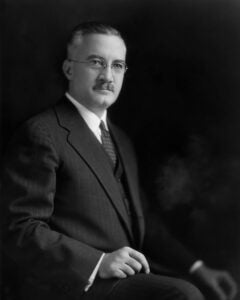
From 1945-1966, Park J. White, MD, a white pediatrician at Children’s Hospital, serves concurrently as the pediatric director at Homer G. Phillips Hospital. Image: Park J. White, MD
1942: David Goldring, MD, sends Black infant to white ward

One evening, David Goldring, MD, is working in the Children’s Hospital Emergency Room when a Black infant is brought in needing an incubator. The Butler Ward is full, so Goldring sends the child to the white ward instead. Furious, the nursing supervisor calls pediatrics head Alexis Hartmann, MD, who backs up Goldring. Listen to the […]
1937: Robert Elman, MD, one of many white Jewish physicians at Homer G. Phillips Hospital
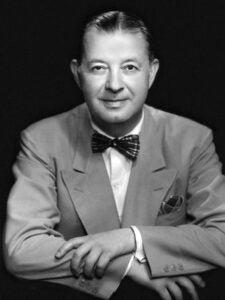
Washington University’s Robert Elman, MD, chief of surgery at Homer G. Phillips Hospital from 1937 to 1955, is one of many white Jewish physicians who treat patients there alongside Black physician colleagues. “Excellence in one’s own field, small as it may be, is the best and perhaps the only way in which each individual can […]
1937: Segregated care for Black patients continues
Barnes Hospital trustees consider eliminating the treatment of Black patients altogether. School of Medicine Dean Philip Shaffer, PhD, opposes the idea, arguing that for 25 years “it has been one of the fine distinctions of this medical center that it offers medical care without racial or social discrimination.” Segregated care for Black patients continues.
“In 1940, I graduated from Meharry Medical School and was accepted as an intern at Homer G. Phillips Hospital. I crossed the bridge over the Mississippi and came up Easton Avenue; I turned right on Whittier, keeping my eye out for the hospital, since I didn’t know what it looked like. Finally, I saw it — and I had to pull over. I was amazed; I had never seen anything like it. I had to park and turn off the engine and just look at this beautiful hospital. I said to myself, ‘Oh, my God. Oh, my God!”
— James Whittico, MD
1937: Homer G. Phillips Hospital for the Colored opens
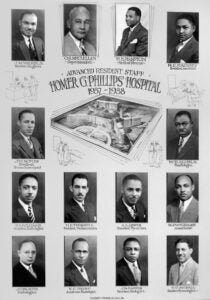
Homer G. Phillips Hospital for the Colored, a public hospital for Black patients, opens in the Ville neighborhood of St. Louis. It has more training slots for Black interns and residents than any other hospital nationwide. It is named for Homer G. Phillips, a Black attorney who fought for the new hospital; he was murdered […]
1933: St. Mary’s Infirmary dedicated as Catholic hospital for Black patients
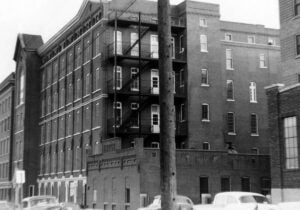
St. Mary’s Infirmary in St. Louis is dedicated as a Catholic hospital for Black patients. It gives admitting privileges to Black physicians and employs Black nurses. Image: St. Mary’s Infirmary, circa 1955
1926: Barnes Hospital employs Black housekeepers
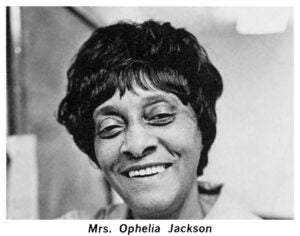
Barnes Hospital employs Black housekeepers, including Ophelia Jackson, who begins 45 years of employment. Image: Ophelia Jackson
1926: Barnes Hospital opens “colored ward” for surgical patients
A “colored ward” for surgical patients is opened in the basement of Barnes Hospital and is eventually named “0400.” It becomes notorious for its location and deplorable conditions. Another ward for Black internal medicine patients is later created by enclosing an old porch on the first floor.